At our clinic, we perform knee joint replacement using a modern robotic system that supports the surgeon throughout the procedure. It is a precise and safe method that allows implants to be individually tailored to each patient’s anatomy.
Unlike CT-based systems, the technology used here is an image-less system — the detailed surgical plan is created during the procedure itself, based on direct anatomical registration of the patient’s knee and dynamic assessment of ligament function. This allows highly accurate mapping of the biomechanical conditions and implant selection that is maximally matched to the individual joint morphology.
The robotic system does not replace the surgeon. It is a tool that increases the precision of bone preparation, reduces the risk of errors and enables more predictable prosthesis positioning.
Robotic technology in knee replacement
During the procedure, the surgeon uses specialist instrumentation supported by a robotic arm. The role of the system is not to perform the operation independently, but to assist the surgeon in bone preparation and precise implant positioning.
The robotic system:
- registers the anatomical landmarks of the knee during the procedure
- assesses ligament tension and function in real time
- enables computer mapping of the limb axis and biomechanics
- defines haptic boundaries — virtual limits that the robotic arm prevents the instrument from exceeding
The surgeon retains full control of the instruments but works within a defined, safe range — significantly reducing the risk of errors. Cutting and bone preparation precision is achieved to fractions of a millimetre.
Robotic surgery, like conventional surgery, involves replacing the damaged joint surfaces with appropriate implants. The difference lies in how the bone is prepared and how the prosthesis is matched.
What does robotic knee surgery involve?
Anatomical registration
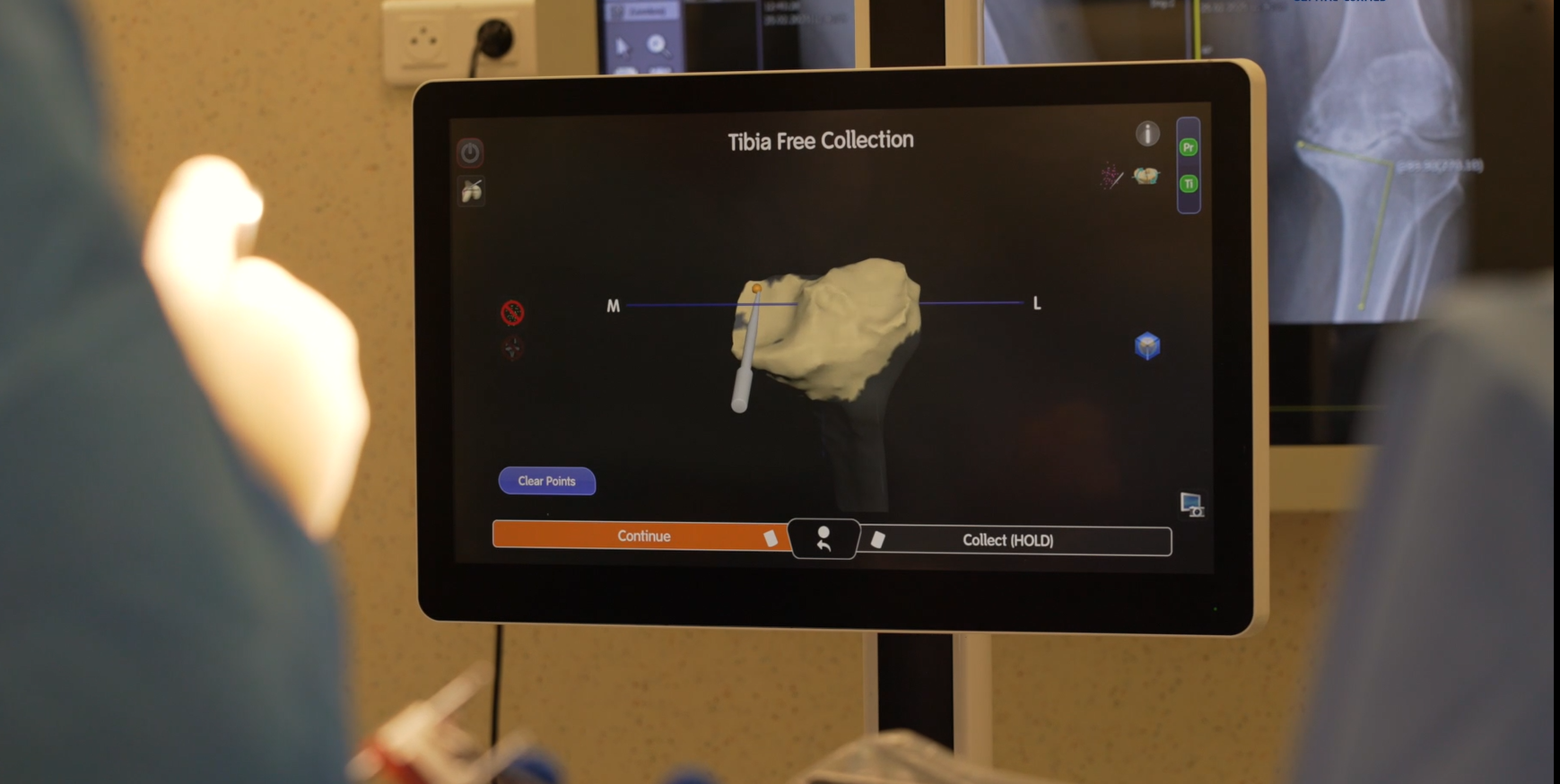
At the start of the procedure, the surgeon performs anatomical registration — mapping the key landmarks on the femur and tibia using a specialist instrument. The robotic system records this data and uses it to create a virtual joint model, enabling intraoperative planning of implant positioning to begin.
Dynamic ligament assessment
The surgeon moves the patient’s knee while the system analyses ligament tension across different ranges of motion. This allows the height of the bone cuts and the implant positioning to be planned to achieve correct joint stability.
Intraoperative virtual planning
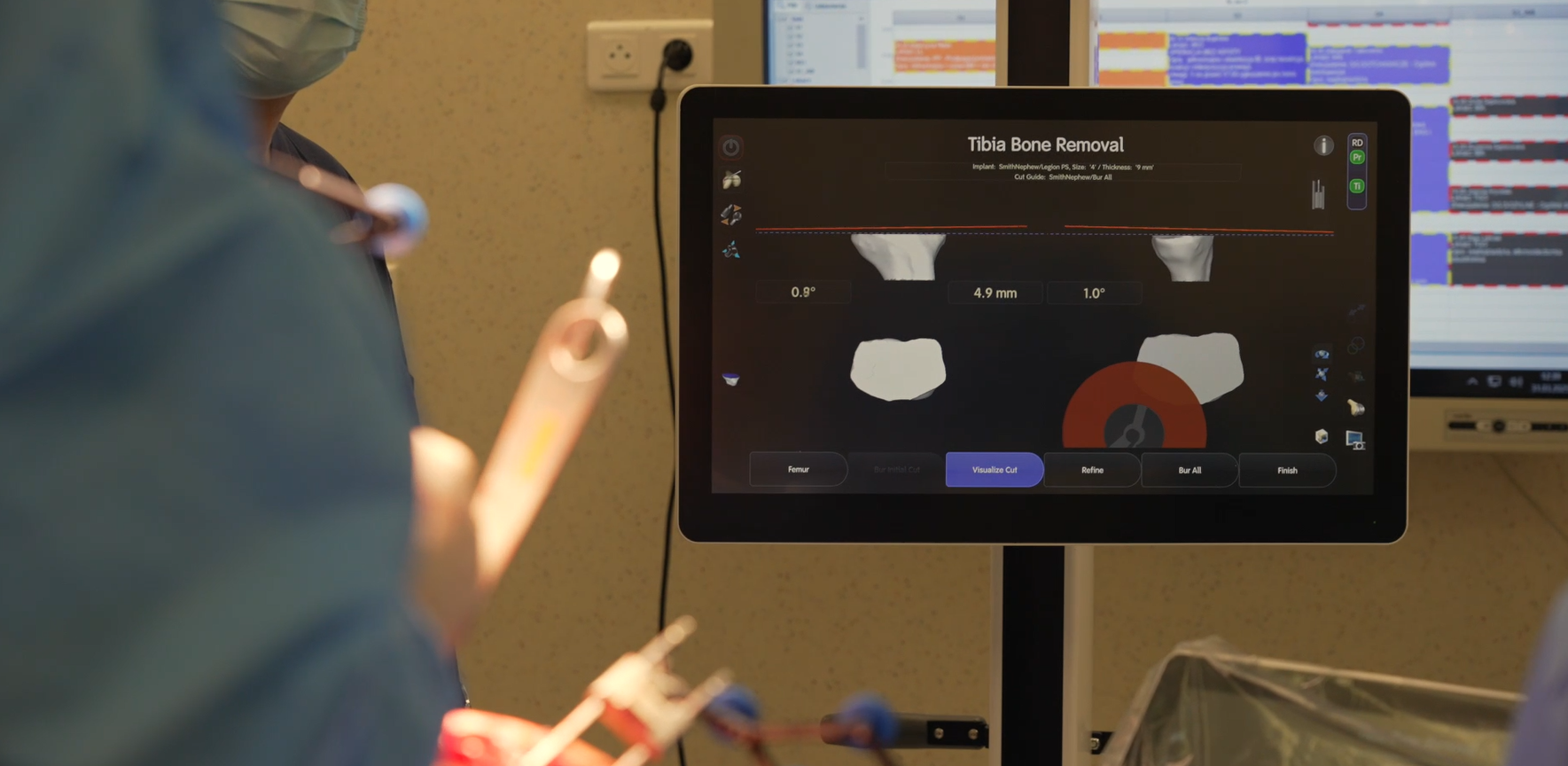
A three-dimensional model of the knee is displayed on the system screen, and the surgeon can adjust parameters in real time, including:
- thickness of bone to be removed
- implant position and rotation
- limb axis
- ligament balance
Robotic arm assistance
The robot defines a safe cutting zone. The robotic arm guides the instrument exclusively within the planned area and prevents movement beyond the defined boundaries. The surgeon performs the cut, but the system will not allow the range to be exceeded or the cut to go deeper than the planned value.
Who is a candidate for robotic knee replacement?
The robotic system is suitable for the majority of cases, and is particularly well-suited for patients with:
- advanced degenerative joint disease
- limb axis deformity
- deformities following trauma
- indications for total or unicompartmental knee replacement
Recovery
While the robotic system does not shorten the healing process itself, its use can reduce soft tissue trauma and facilitate a faster return to everyday activities. Most patients typically walk independently, drive and carry out basic daily tasks within approximately six weeks. Full recovery usually takes between six months and one year.