Urology

Prostate cancer is the most common cancer in men and often develops without any symptoms. Since 2015, the number of prostate cancer deaths in the European Union has been declining — yet in Poland the trend is the opposite. The main reason is late-stage diagnosis, driven by low health awareness and men’s reluctance to undergo screening. Early detection of prostate cancer can give as much as a 90% chance of successful treatment.

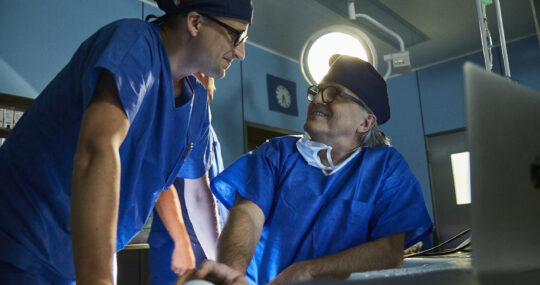
For this reason, a Urology Department was established at LUX MED Carolina Hospital in collaboration with experienced specialists — MD, PhD Marek Filipek and MD Stefan W. Czarniecki — giving patients access to specialist consultations, comprehensive modern diagnostics and minimally invasive surgical treatment, all in one place.

Comprehensive prostate cancer diagnostics and treatment in one place

At LUX MED Carolina Hospital, patients have access to specialist consultations and state-of-the-art diagnostics. When a urological condition is identified, our specialists — working alongside a highly regarded team of urologists — select the appropriate treatment method and perform the necessary procedures. The team also collaborates with leading international centres as part of a centre of excellence network.

Three reasons to choose us

An experienced medical team that has been shaping urology worldwide for years and is united in caring for patients
1
An experienced medical team that has been shaping urology worldwide for years and is united in caring for patients
An individual approach to each patient and comprehensive support throughout pre- and post-operative care
2
An individual approach to each patient and comprehensive support throughout pre- and post-operative care
Access to cutting-edge diagnostic technology and advanced treatment methods
3
Access to cutting-edge diagnostic technology and advanced treatment methods

Urology consultation

A urology consultation is the first step in treating urological conditions. Our medical team consists of qualified and experienced urologists specialising in both conservative and surgical management of prostate cancer, benign prostatic hyperplasia, urethral strictures, kidney and bladder conditions, as well as erectile dysfunction, urinary incontinence and other disorders of the urogenital system.

A urology consultation typically lasts 20–30 minutes. It is recommended for all men — not only those experiencing urinary symptoms or elevated PSA levels, but also as a routine preventive check-up.

Why are preventive urology check-ups worth having?

Men’s health is a topic that continues to be overlooked — particularly when it comes to regular preventive screening. Urological check-ups are one of the most important, yet frequently neglected, aspects of self-care, especially after the age of 40.

Urology check-ups make it possible to detect many conditions at an early stage, before any symptoms appear. One example is prostate cancer — one of the most commonly diagnosed cancers in men. In its early stages it develops without symptoms, which means it can only be reliably identified through preventive screening. Early diagnosis significantly improves the chances of successful treatment and full recovery.

A routine urology appointment can also identify benign prostatic hyperplasia (BPH), urinary tract infections and inflammation, kidney stones, testicular cancer and erectile dysfunction. While some of these conditions may feel sensitive to discuss, ignoring them can lead to serious health complications and a reduced quality of life.

A preventive urology check-up is not only an investment in physical health — it is also an investment in peace of mind. Regular monitoring allows you to act quickly when changes occur and to avoid lengthy treatment down the line. The best approach is not to wait for the first symptoms to appear.

What does a urologist appointment look like?

A urology consultation begins with a patient interview. As part of the physical examination, the doctor may perform a palpation examination (e.g. of the perineum or lower abdomen) or a digital rectal examination (DRE). The doctor may also choose to omit this examination.

Other tests that a urologist may carry out include:

  • Cystoscopy — insertion of a scope into the bladder, used to diagnose bladder infections, kidney stones, bladder tumours, inflammation and changes in the mucous membrane.
  • Abdominal ultrasound (USG) — assesses various conditions of the urinary system and internal organs. Used to evaluate kidney structure, identify kidney stones and detect other pathological changes such as tumours or cysts. Often also performed by a radiologist.
  • Urodynamic testing — evaluates the function of the urinary system, including the bladder and urethra. Particularly useful for diagnosing urinary incontinence, frequent urination and difficulties emptying the bladder. The doctor assesses bladder capacity, bladder pressure and urine flow.

At the end of the appointment, the doctor provides recommendations and, where necessary, issues referrals for further tests — such as a prostate MRI — or for a surgical procedure.

Genitourinary symptoms to watch out for:

  • weak urine stream
  • urinating more than once during the night
  • urgency — a sudden, strong urge to urinate
  • burning sensation in the urethra
  • pain when urinating
  • unusually low or unusually high urine output
  • increased urinary frequency (pollakiuria)
  • urinary incontinence
  • protein, blood or pus in the urine
  • pain in the lumbar spine (lower back) or lower abdomen
  • testicular pain or swelling
  • erectile dysfunction
  • changes in the appearance of the genitals or intimate area — swelling, redness

When should you see a urologist?

  • as a preventive measure — especially for every man over the age of 40
  • elevated PSA levels in your blood
  • when a prostate MRI needs to be interpreted in order to plan a prostate biopsy
  • if you have been referred for a prostate biopsy
  • following a prostate cancer diagnosis — to determine a treatment plan or to establish active disease surveillance
  • if bladder, kidney, ureter, urethral or penile cancer is suspected or confirmed

Urology in Warsaw – diagnostics at LUX MED Carolina Hospital

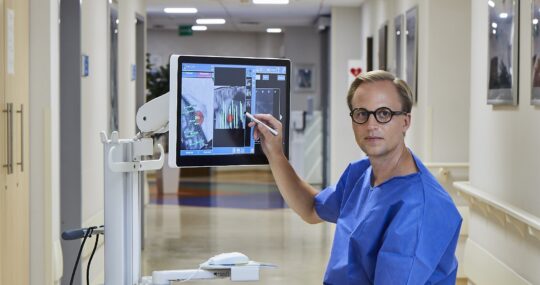
Our team specialises in the diagnosis of urological conditions. Thanks to advanced, purpose-built urological imaging equipment, we are able to identify disorders and — based on the test results — determine the most appropriate course of treatment.

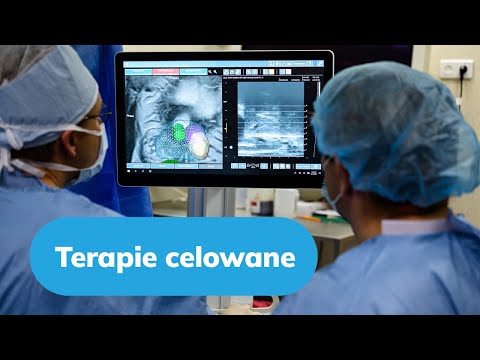
  • Transperineal fusion prostate biopsyConsiderably more precise than a conventional transrectal biopsy. The procedure is performed under intravenous sedation using a transperineal (transcutaneous) approach, which radically reduces the risk of complications and ensures the highest quality histopathological material. Short intravenous sedation maximises sampling precision — the procedure is entirely painless for the patient. The combination of ultrasound and MRI imaging during the procedure represents one of the most advanced diagnostic techniques in urology today.Read more about transperineal fusion prostate biopsy →
  • Multiparametric prostate MRIPerformed as part of the diagnostic pathway for prostate cancer, most commonly in response to elevated PSA levels. The scan locates any abnormal areas within the gland for transperineal fusion biopsy, and determines whether visible tumour changes are confined to the prostate. Regional lymph nodes are also assessed as part of the examination.
  • PSMA-labelled positron emission tomography (PSMA-PET)Provides exceptionally accurate imaging of the local and distant extent of prostate cancer, enabling optimal therapy selection. Critically, it is sensitive even at very low PSA concentrations and is specific to prostate cancer — unlike conventional tracers.


Urological procedures at LUX MED Carolina Hospital

Prostate cancer treatment

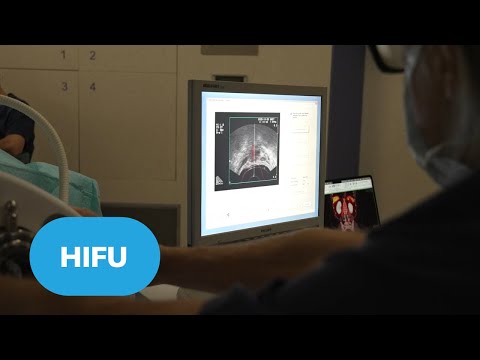
  • HIFU prostate cancer treatment
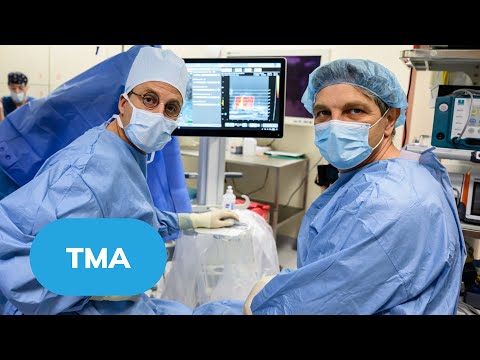
  • Targeted Microwave Ablation of Prostate Cancer (TMA)


Benign prostatic hyperplasia (BPH) surgery

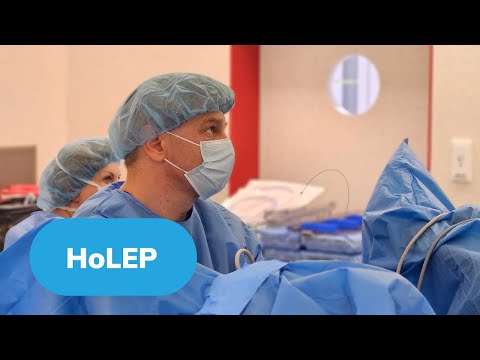
  • HoLEP – Holmium laser enucleation of the prostate
  • Transurethral resection of the prostate (TURP)


Urethral surgery

  • Urethrotomy (urethral stricture surgery)
  • Comprehensive urological diagnostics with Optilume dilation
  • Urethroplasty with buccal mucosa graft (BMG)
  • Tubularisation of the urethra
  • Urethrography in the operating theatre


Laser phimosis removal

  • Laser phimosis removal

Bladder surgery

  • Transurethral resection of bladder tumour (TURBT/TURT)
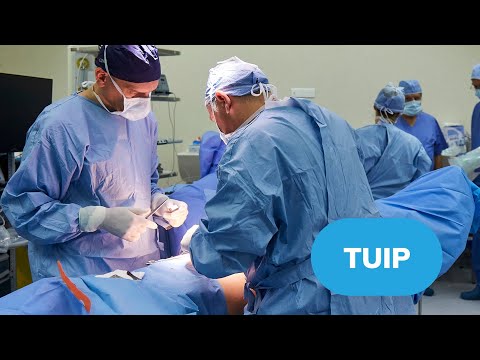
  • TUIP – transurethral incision of the bladder neck
  • Cystolithotripsy


Testicular treatment

  • Orchiectomy
  • Hydrocelectomy (hydrocele repair)


Implants

  • Penile hydraulic implant insertion
  • Testicular implant insertion

Meet our team and check available dates

UROLOGISTS AT LUX MED CAROLINA HOSPITAL

Zobacz terminy wizyt
dr n. med. Marek Filipek

Specjalista urolog

lek. Stefan W. Czarniecki

Specjalista urolog

Lek. Daniel Leszczyński

Specjalista urolog

dr hab n. med. Łukasz Zapała

Specjalista urolog

Lek. Marek Zawadzki
Lek. Marek Zawadzki

Specjalista urolog

Dr n. med. Michał Skrzypczyk

Specjalista urolog

dr hab. n. med. Artur A. Antoniewicz

Specjalista urolog, FEBU