The most common conditions treated endoscopically: from herniated discs to spinal stenosis
The range of conditions treatable by endoscopy is very broad and covers almost all spinal segments — from the cervical through the thoracic to the lumbar region. The method is applicable not only to standard disc pathologies but also to complex structural conditions..
Indications for endoscopic surgery include:
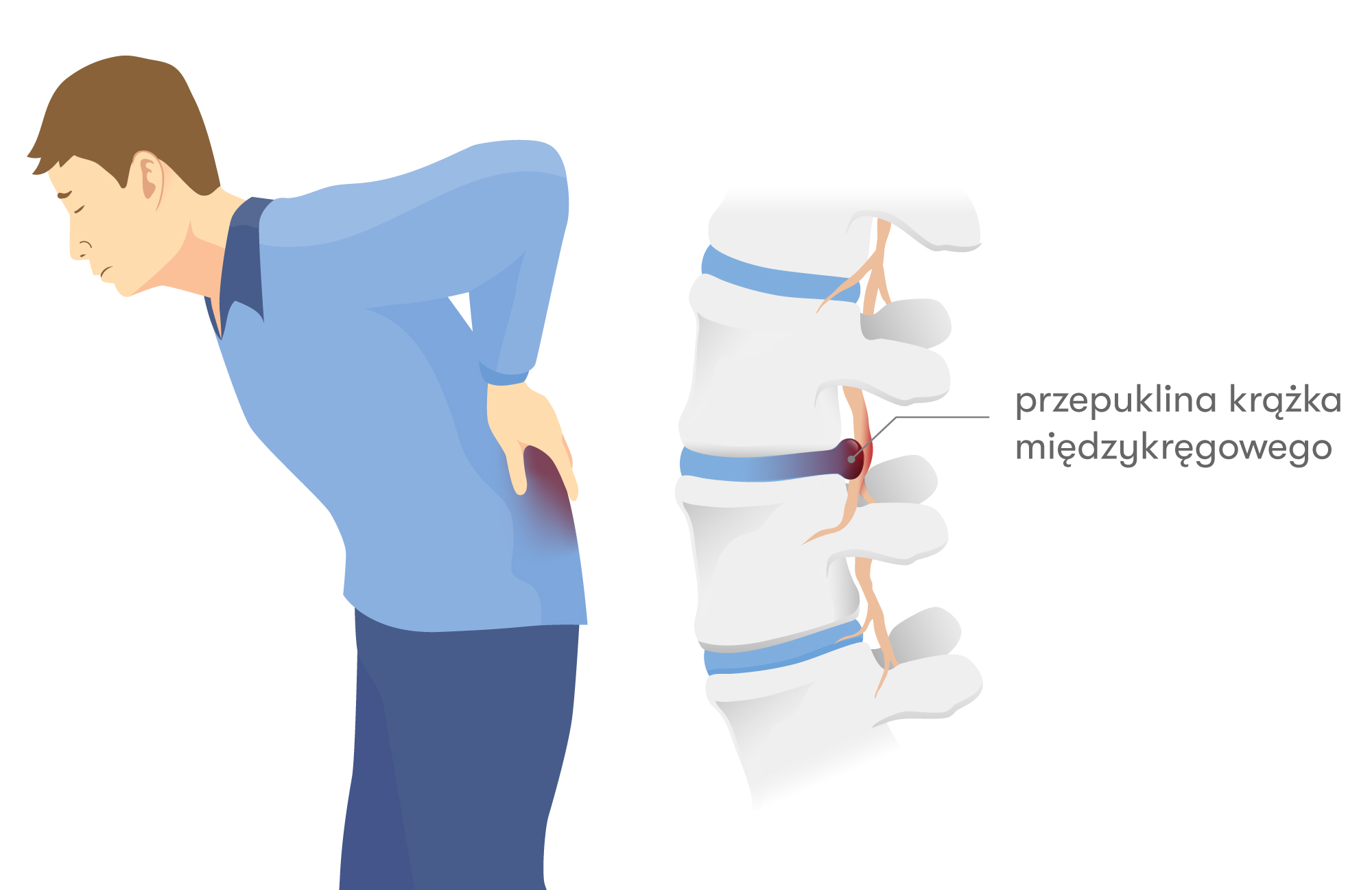
- Intervertebral disc herniation — almost any type of disc pathology, regardless of the spinal level involved.
- Spinal canal stenosis — including narrowing at the L5-S1 level and intervertebral foramen pathologies.
- Facet joint cysts — changes compressing nerve roots.
- Hypertrophic changes — e.g. ligamentum flavum hypertrophy or lumbar osteophytes (bone spurs).
- Cauda equina syndrome — requiring prompt decompression of the neural structures.
- Revision surgery — procedures addressing scar tissue formation following earlier operations performed by other methods.
With such a broad scope, endoscopy becomes a universal tool in the hands of experienced neurosurgeons, enabling them to help patients at varying stages of disease.
What does endoscopic surgery at LUX MED Carolina Hospital involve?
Endoscopic surgery is performed in an operating theatre under the highest standards of sterility. The patient is usually positioned face down, giving the surgeon optimal access to the spine. The procedure is divided into three main stages.
STEP 1: Accessing the operative site The surgeon makes a small skin incision, typically no larger than 0.5–1 cm. Through this incision, a channel is created leading directly to the site of pathology (e.g. the herniated disc). The surrounding soft tissues are carefully moved aside — the continuity of muscles, ligaments and bony spinal structures is not disrupted.
STEP 2: Removing the pathology The endoscope and working instruments are introduced through the prepared opening. The surgeon locates the nerve compression and carefully removes the fragment of the intervertebral disc or other tissues causing pain. The entire process takes place under continuous visual monitoring on the screen.
STEP 3: Closing the procedure Once the surgeon has confirmed that the nerves are fully decompressed, the instruments are removed. The small incision is closed with a few sutures and a dressing is applied. Due to the minimal wound size, bleeding during the procedure is negligible.
Benefits for the patient and post-operative recommendations
Minimally invasive spinal treatment at LUX MED Carolina Hospital delivers a range of measurable benefits that directly affect patient comfort.
According to clinical data, post-operative pain following endoscopic procedures is reduced by approximately 90% compared with conventional methods.
- Early mobilisation The patient can usually get out of bed within a few hours of the procedure.
- Short hospital stay Most patients are discharged within 24 hours of surgery.
- Minimal scarring An incision of up to 1 cm becomes almost invisible over time.
- High safety profile Minimal blood loss and a very low risk of post-operative infection.
- Short recovery The patient returns to daily activities and work more quickly.
After returning home, the patient should protect the operated area, but is not immobilised. It is important to follow guidance on gradually increasing activity levels.
Rehabilitation as an integral part of the treatment process
At LUX MED Carolina Hospital, we recognise that the surgical procedure itself is only part of the success. Rehabilitation is an integral element of effective spinal treatment. A specialist physiotherapy team works alongside neurosurgeons and orthopaedic surgeons to restore the patient’s full function as quickly as possible.
The individually tailored rehabilitation programme aims to:
- address any movement dysfunctions that developed prior to surgery
- strengthen the muscle corset that stabilises the spine
- teach correct movement patterns for everyday life
- prevent future recurrence of pain